Form, Material, and Process
Artist
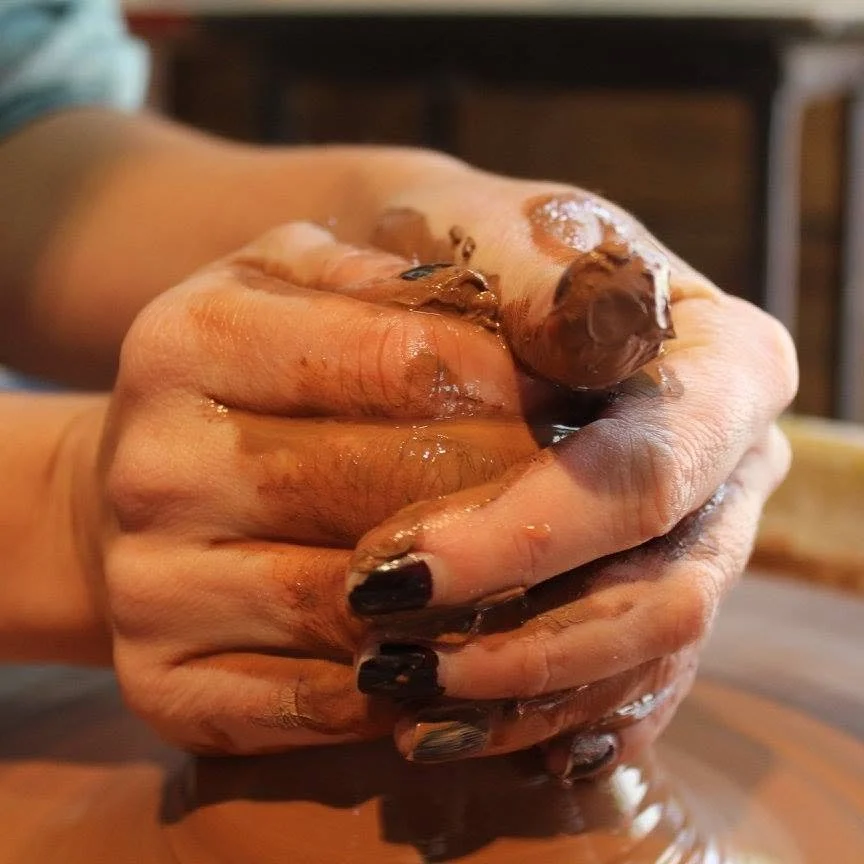
The wheel is my center of gravity when I work with my material. The physicality of throwing a form consumes me; the centrifugal nature of the wheel is meditative. The feeling of a slightly crooked handle, a dented plate lip, or a faintly off-centered bowl is important to me. In this mass-produced world, handmade aspects of objects create a personal experience in our everyday lives. We form relationships with them by getting to know their nuances. I will always make pots for this reason, and will always consider this in the making.
With my sculptural work, I want to challenge the material and push it in ways different from telling it to become a pot. I work with thin sheets of translucent porcelain to create forms and near two-dimensional surfaces. Porcelain is one of the most demanding materials to work with; it requires an exorbitant amount of time and even more patience.
In my studio, when working this way, I interact with a piece from start to finish. If I leave a work unattended, there is a high probability of it drying too quickly, cracking, and breaking beyond repair. I must look over my work, care for it at every stage, attend to it, and check in on it consistently. I allow the cracks to form, just enough to let the material speak. I will not force it to be something that is not in its nature. I let the thin white porcelain do what it wills to do, without compromising the integrity of the piece.
Each mark I make becomes a visible memory on the surface. Clay is a material that holds a lot of energetic and historical information. All clay has plastic memory, or the inclination to return to a shape or reveal a mark previously made, no matter the effort of the handler to conceal it. The plastic memory of porcelain is greater than that of any other clay body. Each mark that is made remains.
The delicacy of the material as it dries, and the difficulty of finding the most unobtrusive way of handling the work as it matures, are what drive me. The object remains fragile no matter what stage it is in, making my relationship with the work a fleeting one. Working in this way allows me to confront my own limitations, as well as the limitations of the material.
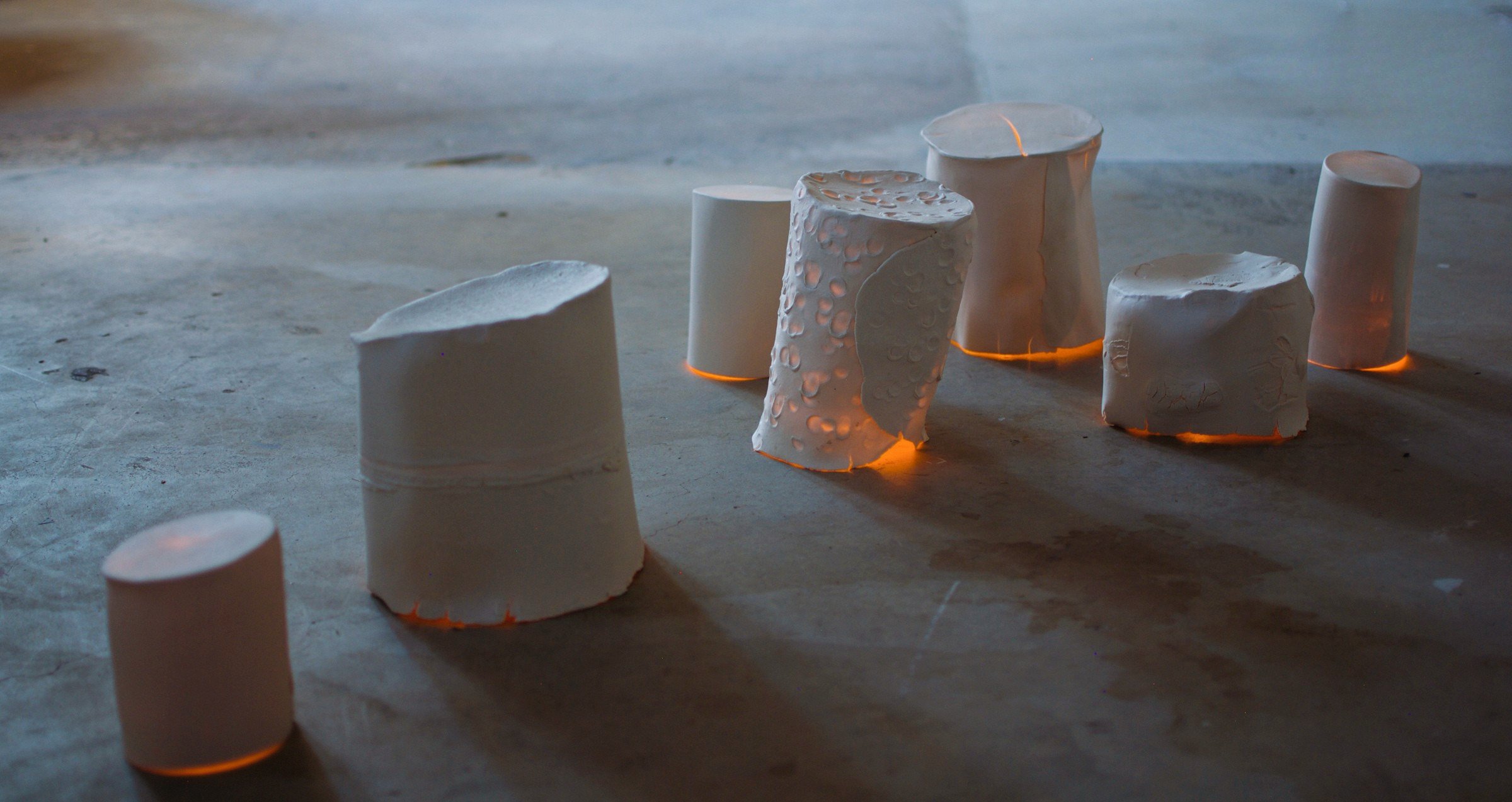
The surface imperfections—the cracking, folding, and scarring in a finished porcelain form—reveal the story of the process. I add warm lights inside the textured and cracked wall pieces and sculptures. The lights illuminate the perceived “imperfections,” allowing the cracks and marks that make each piece unique to shine through the thin, translucent porcelain.
In Japanese philosophy, there is the idea of wabi-sabi, or the act of embracing the flawed or imperfect. Adding the lights is my way of embracing and celebrating the marks, scars, textures, and cracks that make each piece uniquely individual. The delicate work has made it through the long process of becoming what it is today. It has survived this far, and its history should be celebrated.
Educator
I believe in art education as the path to self-discovery and awareness.
My personal philosophy of art education is a holistic one. My ultimate goal is to educate children to respect themselves, others, and property; to inspire them to exercise good judgment; and to instill a lifelong love for the arts by respecting the important role they play in the development of all human beings.
Creating a safe environment where students can access their authentic selves is my priority. In order for children to feel uninhibited when experimenting with materials and expressing their innermost thoughts artistically, they must first feel comfortable enough to do so. I accommodate diverse learning styles and engage each student in their work, encouraging participation and motivation while building the skillful means and playful discovery needed to bring their ideas, vision, and goals into form.
My role is to encourage students to reflect inward by implementing a personally meaningful, imaginative, innovative, interdisciplinary, design-oriented, and multicultural curriculum that each child can connect with. When students feel connected to and invested in their work, their engagement increases, and the skills needed to express their thoughts and ideas more clearly follow.
Through creative thinking and problem-solving, students gain ownership over the knowledge and skills they discover and develop through exploring materials. Through this holistic approach, and the multicultural and imaginative art curriculum I have developed, students are able to create more meaningful connections between themselves, their artwork, and the world.
In order to understand others, we must be able to imagine. It is through our imagination that we are able to experience empathy, understanding, and a deeper respect for others and ourselves.
“Forget your perfect offering. There is a crack in everything. That's how the light gets in.”
— Leonard Cohen
Let’s Create Something Beautiful Together
Have a custom idea or need wholesale quantities? Send me a quick note, I’m here to help bring your vision to life.